The woodworking and related industrial sectors are currently undergoing transformations. Softwoods are rapidly being replaced by hardwoods. It encourages cutting tools and machine makers to begin creating unique hardwood processing solutions. Nonetheless, during hardwood cutting, there is an absence of understanding concerning force prediction and mechanism. Furthermore, the dynamic behaviour of the test rigs (typically excited by the natural wood phenomena) has not been explored in the analyses of high-speed cutting procedures. Previous approaches for disseminating information on hardwood disintegration seldom took into account a larger number of processing factors and material qualities. This study focuses on two main aspects that are currently being debated in the wood research community in regards to bio-based materials disintegration: cutting force measuring technique and cutting force prediction.
To enable a precise analysis of woodcutting, a unique technology that simplifies the complexity of wood process observation has been designed. The world’s first apparatus works on the principle of a 4 m diameter rotor arm. As a result, the movement of its end might be thought of as linear. In addition, the rotor arm rotates at a rate of up to 442 RPM. This equates to a tangential cutting velocity of 93 meters per second. The measuring cut is stand-alone — just one cut is made for every test. It eliminates the influence of the previous cut.
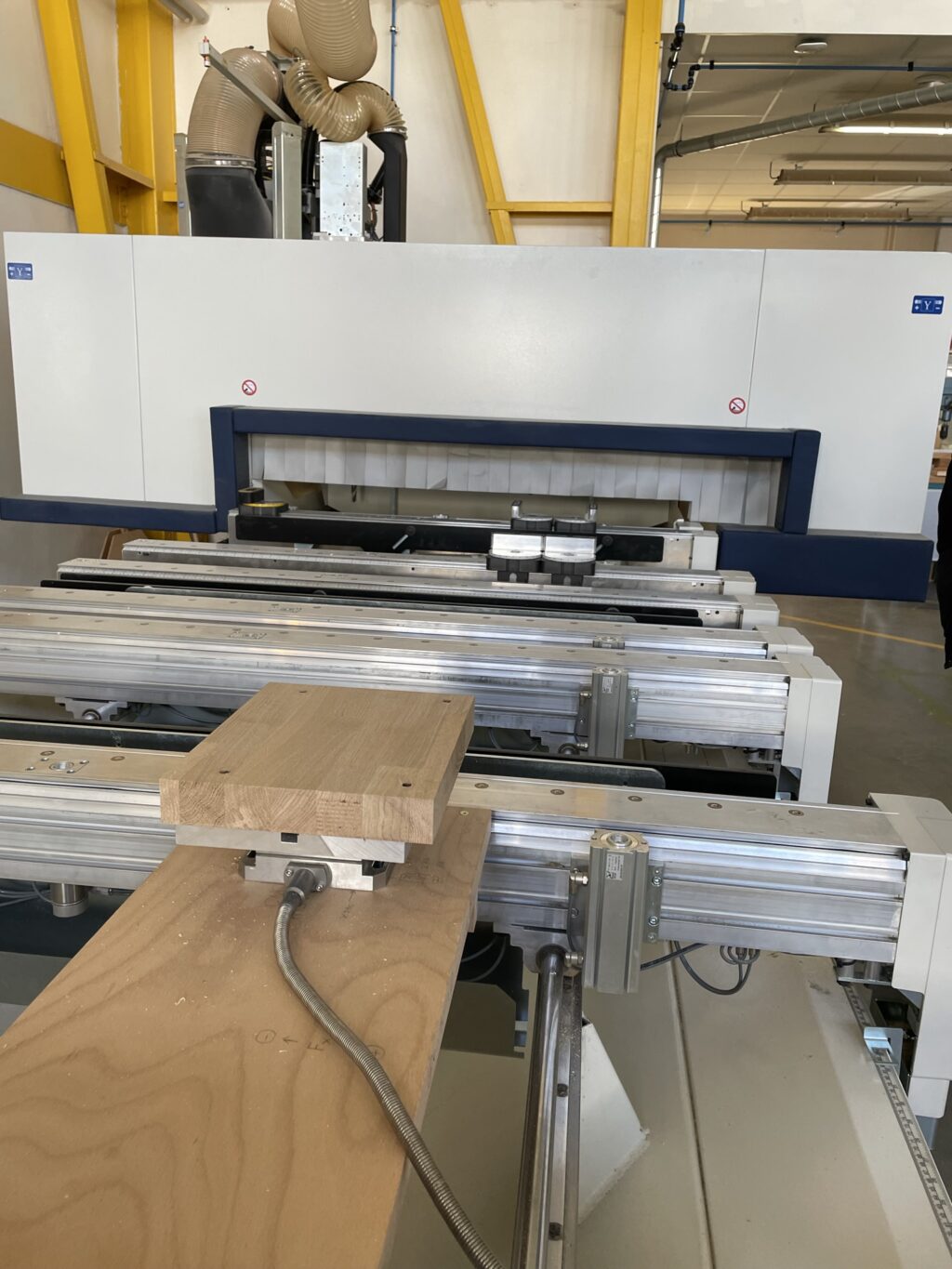
The combination of test settings provides a one-of-a-kind opportunity to research wood cutting. At this speed, a stand-alone cut has never been attempted before. In addition, the linearity approximation provides a better understanding of the process. The previous research described the created test rig and used numerous tests to demonstrate its correctness. The inherent frequency of the system is raised due to the rigidity of the setup. For avoiding signal convolution, a demanding dynamic calibration of the measurement chain is employed. The force sensor is an accurate 3D quartz force sensor. A set of sensors, control systems, and safety zones ensure the device’s safety. The cutting force data is adjusted based on the detected uncut chip thickness.
Carried tests on this device will serve as a precise basis for extending the force prediction cutting model from linear to circular cutting. For process and quality control, this universal mathematical model may be employed as a machine learning model. It contributes to the machine’s long-term viability and service life. The blade, for example, is a component having a finite service life. The cutting force prediction model can help with the creation of a predictive maintenance system and will be useful in the future.


